Explorer and Independent Biologist

Sunday, 17 April 2011

Willandra

Our first foray into the Australian outback was four days camping in the Willandra National Park. The park is a former sheep station, that was famous for its wool. Now, the homestead and surrounding plains habitat are being restored to its original state and the biodiversity is recovering. Read more about the history of the Willandra National Park.

 Sunrise over a backwater of the Willandra Creek
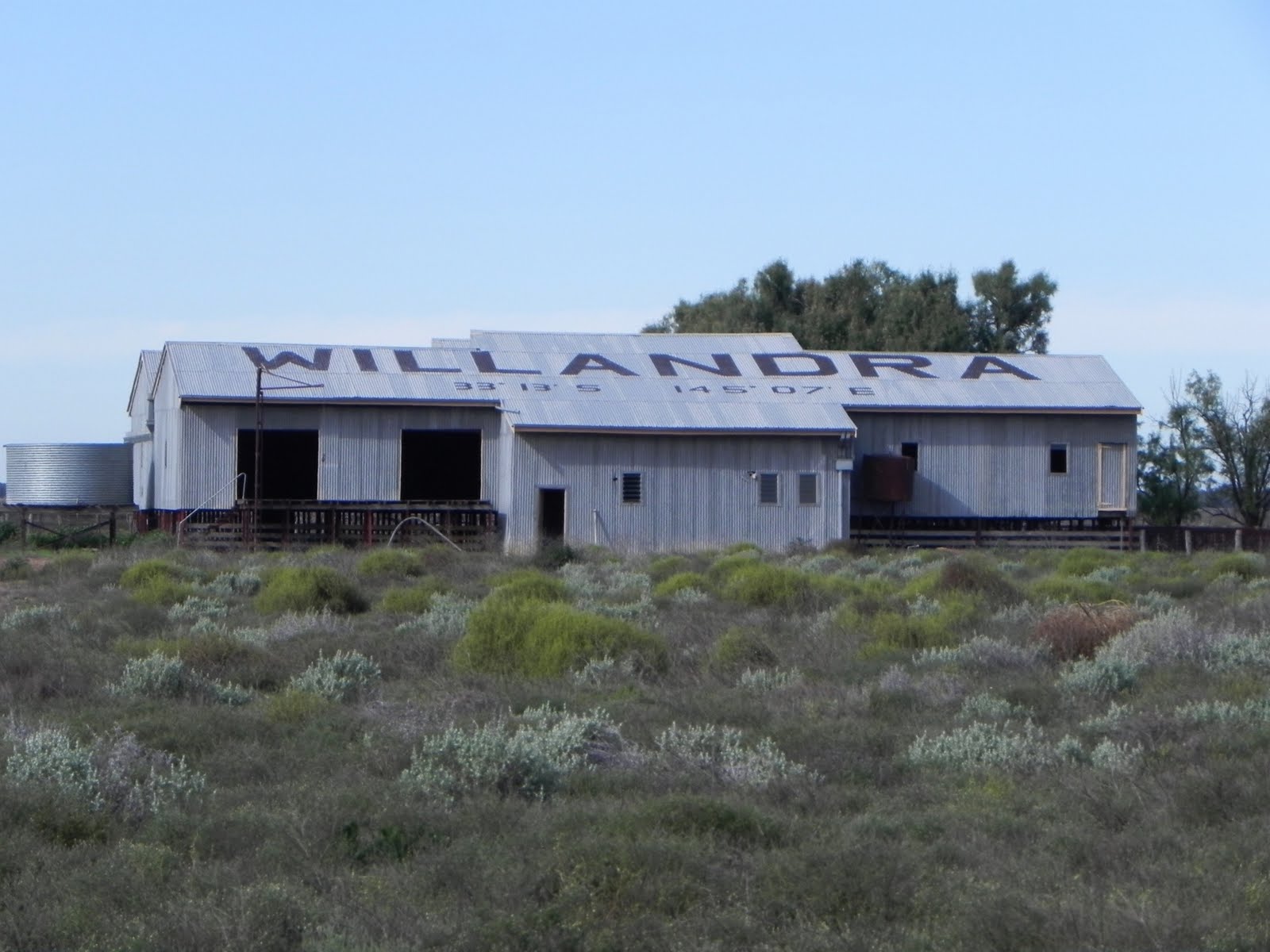

The shearing sheds and buildings of the former sheep station 
are preserved for posterity in the Willandra National Park


Secluded billabongs are a haven for wildlife


The principal habitat under conservation are the grassy plains 
which stretch to the horizon


After a decade of drought, recent rains have brought 
life and colour back to the grasslands 


 With our two vehicles we set of for a safari 
around the Willandra National Park


The grasslands are a habitat for Emu and... 


Red Kangaroo


After the safari, David fishes for carp in a billabong...


...while Bonny and Simon set up a barbecue 
under the shade of a coolibah tree...


...watched over by inquisitive Gallahs


At the end of the day, a blazing sunset over the Willandra plains

Tuesday, 12 April 2011

Under the Southern Cross

My mate Simon met me at Sydney airport at 6.00am on 12th April and whisked straight to his home in Bowen Mountain in the the Blue Mountains of New South Wales, Australia, where I was able to catch up on some sleep and enjoy a walk in the nearby forest with his son David.

As evening fell, the constellation of the Southern Cross was rising. 
The two bright stars at the bottom right (The Pointers) 
point upwards towards the Southern Cross...


...prompting Simon to fire up his luxury barbeque 
to sizzle up some some giant steaks


The girls had prepared for my arrival with some Australian delicacies:
Tim Tams, Freddo Frogs, Cherry Ripes
and of course a case of Victorian Bitter ale


There was even time to find some Australian wildlife icons:

Laughing Kookaburra


Black Swan


Swamp Wallaby


Tomorrow we leave for the Outback

Friday, 8 April 2011

Vanda Station, Antarctica

By popular demand, here are some more previously unpublished pictures of my work as Leader of Vanda Station, Antarctica, 1972/73. Please see the post below this for more details.

 Transport around the Dry Valleys of Victoria land is by helicopter


Ready to board a helicopter

Vanda Station flagpole


 Vanda Station's main hut was a JCB packing case
Laurie Cairns (surveyor); Jim Fowler (Station Leader 1973/73 Season)

Servicing the hydrology weir of the Onyx River, 
a river comprising glacial meltwater 
that flows only in the summer months


The tractor was vital for transporting ice from Lake Vanda  
to the station to melt for drinking water


Local trips around the Wright Valley 
were made in this vehicle we called a "Gnat"


 Is there a blizzard on the way?
Or maybe it is a photographer!

Thursday, 31 March 2011

Maalie in Antarctica

During the early 1970s I was privileged to serve as the Leader of a remote Antarctic field station in the Ross Dependency, administered by the then New Zealand Antarctic Research Programme (now known as  Antarctica New Zealand. The Ross Dependency lies due south of New Zealand and transport there was by flying  from Christchurch, New Zealand directly to McMurdo Sound.

 The Ross Dependency, Antarctica. 
Arrival was at McMurdo Sound and then to Scott Base (far right). 
Vanda Station is a helicopter ride to the Wright Valley (left).

My station, Vanda Station, was a small field station housing 3 - 8 scientists, normally for a summer season, located at the east end of Lake Vanda in the Wright Valley (see map above). The Wright Valley is within a system of essentially snow-free valleys in Victoria Land known as the Dry Valleys.
(There are many excellent pictures of the Dry Valleys here).

 Lake Vanda in the Wright Valley, Victoria land, Ross dependency, Antarctica
Vanda Station is at the end of the frozen lake, bottom right.
(For internet picture source click here)

The remaining images are scans of my own prints, taken in Antarctica nearly 40 years ago. 

The ice-free Dry Valleys of Victoria Land resemble more of a moonscape 
than a conventional image of Antarctica. 
The tiny Vanda Station is arrowed


Vanda Station is a collection of wooden huts - 
formerly JCB packing cases!


Vanda Station team 1972-73 Summer Season
Mike Miles (Technician); Jim Fowler (Leader); Ian Brown (Meteorologist)


Meteorology was one of the prime research investigations at Vanda Station.
Maalie records observations at the station's Stevenson Screen

Hydrology and glaciology  are also important. 
The summer sun causes glacial melt-water to form the Onyx River 
that flows along the valley floor into Lake Vanda. 
Measuring glacial melt and the river flow provides 
vital evidence about climate change.
Note that the hanging glaciers on the sides of the valleys 
in the background almost reach the valley floor .


Maalie examines a seal that has lost its way from the coast 
and has become dessicated and mummified


A present-day picture of the Wright Valley 

Notice how the hanging glaciers (projecting in from top and bottom) 
scarcely reach into the valley itself.

Compare with the picture of the river (above) that was taken 40 years ago.
Tangible evidence of climate warming?

Saturday, 19 March 2011

Ostara with Przewalski's Horse

Ostara is the Festival of the Spring Equinox, celebrated on 21st March. Now, the days are growing longer than the nights, until the Summer Solstice. I am celebrating Ostara in style in the Seewinkel National Park in Burgenland, Austria, where there is a breeding programme for the very rare Przewalski's Horse.


Przewalski's Horse is declared  "Extinct in the Wild"

The horse was discovered in the steppes of the Gobi Desert in 1879 by Colonel Nikolai Przewalski, who took bones he found during his explorations back to the University of St Petersburg. There, zoologists confirmed it as 'a species new to science', and named it after the Colonel-explorer.


.
The ancestor of the modern horse

Biologists consider the species to be the ancestor of the modern horse. Sadly, they were victims of over-hunting for meat and competition with people for habitat; in 1970 it was declared "extinct in the wild". However, the gene pool is preserved in coordinated captive breeding programmes around the world, and re-introduction of animals back into the wild has already begun.


 Conservation  breeding programme - 
these two look like they are getting on with it!

 In the Seewinkel National Park, the horses are also part of a habitat management scheme in which their grazing maintains the biodiverstiy of the plant life.

Grazing by the horses is important for grassland management 


Thanks to the breeding programme 
their descendants may be safe for the future


A Happy Ostara to all my Readers!

Tuesday, 15 March 2011

Illmitz comes to Askam

It was my pleasure to welcome my friends Helmut and Katharina from Illmitz, Burgenland, Austria, to Maalie Court for a few days. Illmitz is on the border of Austria and Hungary close to the Seewinkel National Park where I go to conduct birds surveys.

The visit coincides with the blooming of the very first daffodils, 
for which Cumbria is noteworthy from the poetry of William Wordsworth


Helmut and Katharina enjoy the view of Esthwaite Water, 
their first lake in the Lake District


Soon they are observing the local bird life


Negotiating a bridge over the beck at Crummock Water


The dry stone walls, characteristic of the north of England,
is a source of fascination


Buttermere is reputed to be the most attractive scenery in England


And what better way to end a day exploring in the Lake District 
than to sample a pint of Real Ale in the Black Dog pub

Thursday, 10 March 2011

When the wild swans fly...

As the spring equinox draws inexorably closer, March is transition time for wildlife. There are still reminders of winter, but also strong signs of spring. Summer migrant birds have already arrived on the southern shores of Britain, whilst in Cumbria, a very few spring flowers have dared to open their petals in sheltered sun-traps on south-facing banks.

Crocuses give a splash of colour to the hedgerow

 A delicate primrose dares to show, defying night-time frosts

Summer migrant birds have not yet reached Cumbria, but some of our winter-visitors are hanging on, preparing to depart soon, to head north to their tundra breeding grounds. I visited Martin Mere wetland wildfowl refuge to see some of the last wild geese and swans from the observation hides before they leave.

On the surrounding pastures, hundreds of Pink-footed Geese 
look restless as think about getting on their way


A colourful male Brambling fattens up at a bird feeder 
before departing for Lapland

On the mere, groups of wild Whooper Swans face into the wind, 
perhaps waiting for one or two more food handouts before migrating to Iceland


Some pairs of Whooper Swans are already "getting in the mood",
engaged in their synchronised courtship display


"Farewell, I'm leaving soon; see you next winter!"